



Journalism is changing fast. AI tools are now part of every modern newsroom. In 2025, journalists rely on AI to research, write, and report news faster. These tools help save time, improve accuracy, and boost storytelling.
AI can automate repetitive tasks, analyze data, and even suggest ideas. This allows journalists to focus on in-depth reporting and creativity. From writing articles to producing videos, AI covers many aspects of journalism.
Choosing the right AI tools is essential. Some are perfect for writing, others for research or fact-checking. Using AI wisely ensures better workflow and higher quality content.
In this blog, we review 15 best AI tools for journalists in 2025. Each tool helps improve efficiency, accuracy, and audience engagement. By the end, you will know which AI platforms suit your newsroom.
Benefits of Using AI Tools for Journalists
AI tools save time. They can draft articles, summarize reports, or analyze large datasets quickly. This allows journalists to work faster without sacrificing quality.
AI improves accuracy. Automated fact-checking reduces errors and ensures trustworthy reporting. Tools can spot inconsistencies or bias in content, helping maintain credibility.
Research is easier with AI. Platforms can scan news feeds, social media, and databases to find trends, sources, and insights in seconds. This eliminates hours of manual work.
AI also helps create better stories. From grammar corrections to style suggestions, tools improve readability and engagement. Visual AI tools help journalists add videos, graphics, or charts to stories.
Overall, AI enhances productivity, quality, and speed. It supports journalists while keeping human creativity and judgment at the center.
Key Features to Look for in AI Tools for Journalists
Not all AI tools are the same. Look for tools with natural language processing (NLP) for writing and summarization. This allows AI to understand context and create meaningful content.
Data analysis and visualization features help journalists interpret complex datasets. Graphs, charts, and reports can be generated automatically.
Transcription and summarization are crucial for interviews and meetings. AI tools like this save time and make content easier to use.
Integration is another key feature. Tools should work with your newsroom CMS, social media, and collaboration platforms. Multi-language support is important for global reporting.
Finally, choose tools that balance automation with human oversight. AI should enhance, not replace, journalists’ work.
Common Mistakes Journalists Make When Using AI
Over-reliance on AI is a major mistake. While AI handles routine tasks, human judgment is essential for accuracy and ethics.
Poor integration can cause workflow issues. AI should complement your existing tools, not disrupt them.
Ignoring AI bias is another problem. AI models may reflect existing biases in data. Journalists must verify outputs before publishing.
Some teams fail to update AI tools regularly. Outdated models can give wrong suggestions or miss trends.
Finally, neglecting human creativity reduces story quality. AI can assist, but originality and investigation remain human strengths.
15 Best AI Tools for Journalists in 2025
Journalism is changing fast, and AI tools are now a big part of how stories are researched, written, and shared. From speeding up fact-checking to improving writing quality, these tools help reporters save time and focus on storytelling. In this section, we will look at the 15 best AI tools for journalists in 2025 that can boost productivity, accuracy, and creativity in the newsroom.
1. ChatGPT


ChatGPT is a versatile AI for content generation and research. It can draft articles, suggest headlines, and provide topic ideas quickly.
Journalists use it to overcome writer’s block and generate multiple versions of a story. ChatGPT also summarizes long documents for faster understanding.
Its AI can answer questions and provide background information. However, outputs must be verified to avoid factual errors.
Pricing includes free and paid tiers, with ChatGPT Plus offering advanced features. It is suitable for individual journalists and teams alike.
ChatGPT helps increase productivity while allowing journalists to focus on investigative reporting.
2. Jasper AI


Jasper AI focuses on content creation. It helps journalists write blog posts, news articles, and social media content.
The AI suggests phrases, improves grammar, and adapts tone to match the audience. Templates and workflows save time on repetitive tasks.
Jasper can also generate ideas for headlines and story angles. Its integration with SEO tools ensures content ranks well online.
Pricing starts at $49 per month. The platform is ideal for journalists needing fast, high-quality drafts.
Jasper AI supports consistent output and helps meet tight deadlines in fast-paced newsrooms.
3. Grammarly AI


Grammarly AI is a writing assistant that improves grammar, style, and readability. It detects tone, clarity issues, and conciseness problems.
Journalists can write faster with fewer errors. Grammarly also offers plagiarism detection and vocabulary enhancement suggestions.
It works in browsers, word processors, and CMS platforms, making it highly versatile.
Pricing includes free and premium plans starting at $12 per month. Grammarly is essential for journalists who need error-free, polished content.
It ensures quality and professionalism in every article published.
4. QuillBot
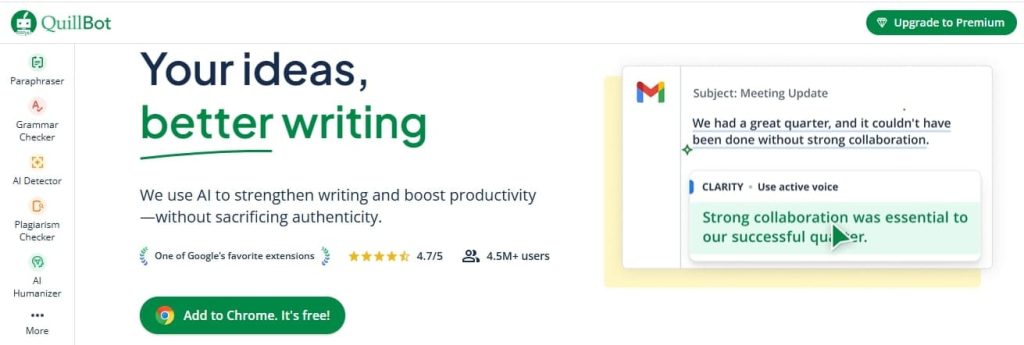

QuillBot is an AI-powered paraphrasing and summarization tool that helps journalists rewrite content efficiently. It can rephrase sentences, improve readability, and generate multiple variations of the same text.
Journalists use QuillBot to condense long reports, summarize interviews, or adapt press releases for different platforms. Its AI ensures that the meaning remains intact while improving clarity and flow.
The platform also includes grammar and vocabulary suggestions, which help maintain a professional tone across articles. QuillBot supports multiple writing modes, such as formal, creative, and concise, making it versatile for various journalistic needs.
Pricing includes free access with limited features, while premium plans start at $14.95 per month. It is ideal for journalists who need to speed up content preparation without compromising quality.
Overall, QuillBot helps reporters save time, refine language, and maintain consistent, readable content across multiple stories.
5. Synthesia
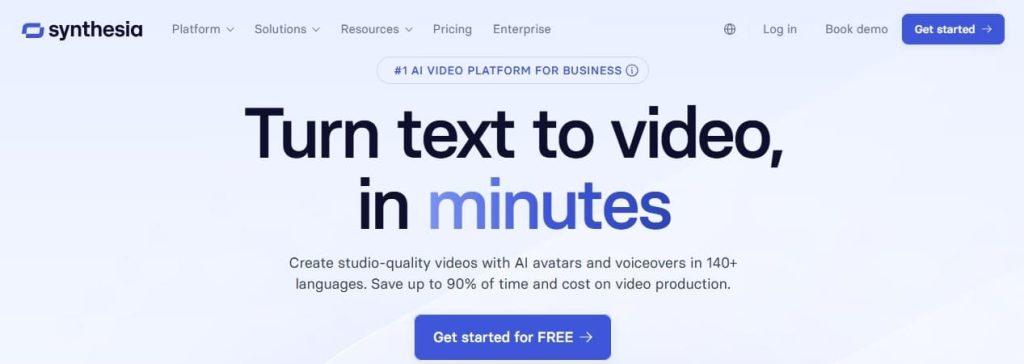

Synthesia is an AI video generation platform that allows journalists to create engaging video news content quickly. Using AI avatars and text-to-speech technology, it can convert written articles into videos in multiple languages.
This tool is particularly useful for newsrooms aiming to produce multimedia content for social media or web platforms. Journalists can focus on reporting while Synthesia handles video creation.
The platform includes customizable templates, background music, and graphics options. It is easy to use even for those without video editing experience, reducing production time significantly.
Pricing is based on subscription tiers, with plans starting around $30 per month. Synthesia is ideal for journalists and media teams looking to expand into video storytelling without investing heavily in equipment or editing software.
By using Synthesia, newsrooms can reach wider audiences and enhance engagement through professional-quality videos.
6. Descript


Descript is an AI-driven transcription and audio editing tool that simplifies podcast production and interview processing. It converts audio and video recordings into editable text, allowing journalists to quickly summarize or extract quotes.
The platform also includes features like overdubbing, screen recording, and multi-track editing. This reduces the time spent on manual transcription and enables faster content production.
Descript supports collaboration, making it ideal for teams working on multimedia projects. Its AI tools automatically remove filler words and improve audio clarity, enhancing the final product.
Pricing includes free and paid plans starting at $12 per month. Descript is perfect for journalists producing podcasts, video content, or in-depth interviews that require fast, accurate transcription.
By streamlining audio and video workflows, Descript ensures reporters can focus on storytelling rather than technical editing.
7. Lumen5


Lumen5 is an AI video storytelling platform that converts articles and blog posts into short, engaging videos. Journalists can quickly transform written news into visual content optimized for social media.
The AI suggests images, clips, and music based on the article’s content. Users can customize branding, text overlays, and transitions to maintain a professional look.
Lumen5 saves time compared to manual video creation and allows media teams to produce multiple videos simultaneously. It also supports multilingual content, helping journalists reach global audiences.
Pricing starts at $19 per month with premium plans offering additional customization and higher video resolution. Lumen5 is ideal for journalists and digital newsrooms looking to create shareable, visually appealing content.
By using Lumen5, news outlets can expand their digital presence and engage readers through dynamic video content.
8. NewsWhip


NewsWhip is a data-driven AI platform that tracks trending news stories and predicts audience engagement. Journalists can monitor social media, blogs, and online publications to identify topics that resonate with readers.
The AI analyzes performance metrics such as shares, likes, and comments, helping reporters prioritize stories that are likely to attract attention. This insight allows newsrooms to make data-backed editorial decisions.
NewsWhip also offers alerts for breaking news and emerging trends, ensuring journalists stay ahead of competitors. Its dashboard is user-friendly and integrates with existing newsroom workflows.
Pricing is customized based on the size of the organization and required features. NewsWhip is particularly valuable for media teams focused on audience engagement, social media strategy, and real-time reporting.
By leveraging NewsWhip, journalists can focus on stories that matter most to their audience, improving reach and impact.
9. Kafkai


Kafkai is an AI content generator designed for niche topics and specialized journalism. It creates high-quality articles quickly, helping reporters cover a wide range of subjects efficiently.
The AI generates multiple drafts, allowing journalists to select the best version or adapt it for their style. Kafkai also supports different tones, from formal to conversational, making it versatile for various news formats.
It reduces the time spent on routine writing, enabling journalists to focus on research, interviews, and investigative work. Its machine learning models improve over time, producing more accurate and relevant content.
Pricing starts at $29 per month, with higher-tier plans for bulk content creation. Kafkai is ideal for newsrooms and freelance journalists looking to produce consistent, quality content in specialized areas.
By using Kafkai, reporters can handle niche topics efficiently while maintaining high standards in content quality.
10. Wordtune

Wordtune is an AI writing assistant that enhances clarity, tone, and style. Journalists use it to refine drafts, rephrase sentences, and improve readability.
It offers suggestions for formal, casual, or persuasive tones, making it useful for articles, op-eds, and reports. The AI also helps maintain consistency in voice across multiple stories.
Wordtune integrates easily with browsers, word processors, and content management systems. This allows journalists to improve content on the go without switching platforms.
Pricing includes free and premium plans starting at $9.99 per month. Wordtune is perfect for journalists who want polished, professional content with minimal editing time.
Using Wordtune ensures stories are clear, engaging, and tailored to the target audience, enhancing reader satisfaction.
11. Feedly AI


Feedly AI is a research and news aggregation tool that helps journalists stay informed about the latest trends. It scans thousands of sources and surfaces relevant news, reports, and insights.
The AI prioritizes content based on relevance, engagement, and credibility. This allows journalists to focus on stories with the most impact while saving hours of manual research.
Feedly AI also supports topic tracking and alerts for breaking news. Its integration with collaboration tools helps newsroom teams share insights and coordinate reporting efficiently.
Pricing includes free and premium plans starting at $12 per month. Feedly AI is essential for journalists who need timely, accurate, and comprehensive research support.
By leveraging Feedly AI, reporters can make data-driven editorial decisions and stay ahead in a fast-paced news environment.
12. Otter.ai


Otter.ai is an AI-powered transcription and note-taking platform ideal for journalists conducting interviews or attending press conferences. It converts speech into accurate text in real time.
The platform supports audio recording, live transcription, and searchable notes. Journalists can highlight key points and export transcripts for quick reference or publication.
Otter.ai also integrates with Zoom, Microsoft Teams, and Google Meet, making it suitable for remote interviews or virtual reporting. The AI reduces manual transcription time, improving efficiency.
Pricing includes free and paid plans starting at $8.33 per month. Otter.ai is perfect for reporters who handle frequent interviews, ensuring accuracy and saving hours of work.
By using Otter.ai, journalists can focus on asking the right questions instead of worrying about capturing every word manually.
13. Canva AI


Canva AI is a graphic design platform with AI features that help journalists create visuals for articles, social media, and reports. It offers templates, image suggestions, and automated design recommendations.
The AI assists in creating infographics, charts, and social media posts, ensuring content is visually appealing and informative. Journalists can quickly produce professional visuals without design expertise.
Canva AI also supports collaboration, allowing teams to maintain consistent branding across multiple stories. Its drag-and-drop interface makes designing fast and easy.
Pricing starts free, with premium plans from $12.99 per month. Canva AI is ideal for journalists who want to enhance storytelling with graphics and visuals.
By using Canva AI, media teams can improve audience engagement through visually compelling content.
14. CoverageBook


CoverageBook is an AI-driven platform that helps journalists and PR teams measure and visualize media coverage. It automates the process of creating media reports and performance insights.
The AI collects articles, social posts, and mentions, and generates visually appealing reports with charts, metrics, and summaries. This saves journalists hours of manual compilation.
CoverageBook also supports benchmarking, helping teams evaluate the impact of campaigns or stories over time. Its cloud-based interface allows easy collaboration across teams.
Pricing starts at $49 per month, with options for larger organizations. CoverageBook is ideal for journalists and PR professionals who want accurate, efficient reporting of media reach and engagement.
By using CoverageBook, media teams can focus on content creation while AI handles measurement and analytics.
15. Cognigy


Cognigy is an enterprise-level AI conversational platform that supports complex workflows and multi-channel interactions. It enables newsrooms to automate reader interactions, subscriptions, and FAQs.
The AI handles chat, voice, email, and social media queries, while integrating with CRM and content management systems. This allows journalists to focus on reporting while AI manages repetitive communications.
Cognigy provides detailed analytics and workflow automation for sophisticated newsroom operations. Its customization capabilities support unique automation needs.
Pricing is customized for enterprise clients. Cognigy is ideal for large media organizations requiring advanced AI automation across multiple channels.
By using Cognigy, newsrooms can streamline operations, improve audience engagement, and maintain high-quality support without increasing staff workload.
Future of AI in Journalism
AI will continue transforming journalism in 2025 and beyond. Newsrooms will increasingly rely on AI for content creation, research, and audience engagement.
AI can assist investigative journalism by analyzing vast datasets quickly. Ethical considerations and fact-checking will remain critical to maintain trust.
Multimedia content, including AI-generated videos and graphics, will become standard in digital news. Integration of AI with human oversight ensures high-quality reporting.
The balance between automation and human creativity will shape the next decade of journalism. Teams that leverage AI effectively will produce faster, more engaging, and accurate stories.
Also Read
19 Best Free AI Tools for Architects
13 Best AI Tools for Customer Support
15 Best Free AI Tools for Python Developers
15 Best AI Tools for Finance Professionals
Conclusion
AI tools have become essential for modern journalism. They save time, improve accuracy, and enhance storytelling.
From writing and research to multimedia production and fact-checking, the 15 tools reviewed provide solutions for every aspect of reporting.
By adopting AI responsibly, journalists can focus on creativity and investigative work while AI handles repetitive tasks.
The future of journalism is a partnership between human reporters and intelligent AI systems. Media teams that embrace this balance will thrive in 2025 and beyond.
FAQs
Q1: Can AI replace journalists entirely?
No. AI can automate routine tasks, but human judgment, creativity, and ethical reporting are irreplaceable.
Q2: Are AI tools expensive for small newsrooms?
Some tools are free or affordable for small teams. Premium enterprise solutions may be costly but often offer higher efficiency and scalability.
Q3: How can journalists ensure accuracy with AI-generated content?
Always fact-check AI outputs and cross-reference with reliable sources. AI is a support tool, not a replacement for verification.
Q4: What AI tools are best for investigative reporting?
Tools like Feedly AI, ChatGPT, and Factmata help gather data, summarize information, and verify sources for investigative work.
Q5: How can AI improve audience engagement in journalism?
AI can personalize content, track trends, automate outreach, and create multimedia stories, enhancing engagement and reader satisfaction.