

Audiobooks are growing fast in 2025. Millions of people now listen to books while driving, working out, or relaxing. This huge demand has opened the door for authors, publishers, and creators to reach more listeners.
But recording a traditional audiobook takes time, money, and effort. You need a studio, a professional narrator, and lots of editing. For many indie authors and small publishers, this is too expensive.
This is where AI audiobook tools come in. These tools use artificial intelligence and advanced text-to-speech technology to turn written words into natural-sounding audio. The best part? Many are free or affordable, and they let you create professional audiobooks quickly.
In this guide, we will explore the 12 best AI tools to create audiobooks in 2025. We’ll cover both free and paid tools, explain their features, and help you choose the right one.
Why Use AI to Create Audiobooks?
AI audiobook tools have changed the publishing industry. Here are some reasons why more creators now prefer AI over traditional recording:
1. Save Time
Recording a full-length book can take weeks. With AI, you can generate an audiobook in hours. This is perfect for authors who want to publish quickly.
2. Lower Costs
Hiring professional narrators and booking studios is costly. AI tools provide high-quality voices at a fraction of the price. Some even have free plans for small projects.
3. Natural-Sounding Voices
Modern AI tools use neural voices that sound human-like. They can mimic emotions, pacing, and tone, making the listening experience more enjoyable.
4. Multi-Language Support
AI audiobook software often supports many languages and accents. This allows authors to publish their work globally without hiring multiple narrators.
5. Scalable Production
If you’re working on a large project, like a full book series, AI makes it easier to scale. You can create multiple audiobooks without worrying about time or budget.
How to Choose the Right AI Audiobook Tool
Not all AI tools are the same. Some are perfect for indie authors, while others are built for publishers or enterprises. Here are the main things to consider when choosing an audiobook creator:
1. Voice Quality
The most important factor is how natural the AI voice sounds. Look for tools with expressive, human-like voices that can adjust tone and style.
2. Supported Formats
Check what file formats the tool exports. Common ones include MP3, WAV, and M4B. If you plan to upload to Audible, make sure the format is compatible.
3. Editing Options
Some tools allow you to edit pacing, pronunciation, and emphasis. This is helpful for keeping your audiobook engaging and accurate.
4. Language and Accent Variety
If your audience is global, choose a tool with multiple language options. A wide range of accents can also make your audiobook sound more authentic.
5. Pricing
Some tools are free for basic use. Others charge monthly or per project. Compare pricing plans before committing. Free versions are good for testing, while paid ones are better for professional publishing.
6. Platform Integration
If you want to sell on Audible, Kindle, Spotify, or Apple Books, check if the AI tool integrates easily with these platforms.
12 Best AI Tools to Create Audiobooks in 2025
Discover the 12 best AI tools to create audiobooks in 2025. From free to premium options, these platforms help authors and creators turn text into natural-sounding audio quickly and easily.
1. Murf AI
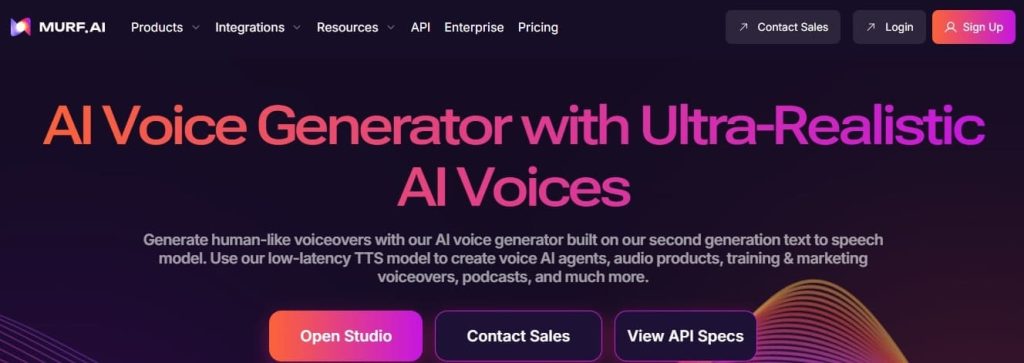
Murf AI is one of the most popular AI voice generators for audiobook creators. It offers a wide library of natural-sounding voices that can bring your book to life. What makes Murf stand out is its focus on professional voiceovers. Many authors and publishers use it not only for audiobooks but also for podcasts, videos, and e-learning content.
Murf AI has an intuitive interface that makes it easy for beginners. You simply upload your script or text, choose a voice, and generate your audio. The tool also allows fine-tuning. You can adjust pitch, speed, pauses, and even emphasis to make the narration sound more natural.
Another benefit of Murf is its variety of voices. The platform has male and female voices in multiple languages and accents. If you’re targeting a global audience, this feature is very useful.
Murf AI offers both free and paid plans. The free version is good for testing, but it comes with limitations. For professional audiobook projects, you’ll likely need a paid plan, which starts at an affordable rate.
2. Play.ht
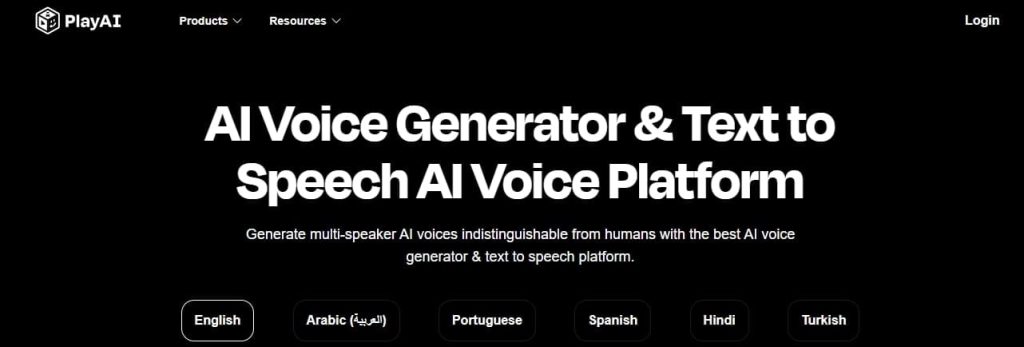
Play.ht is another excellent AI audiobook tool. It is known for its high-quality text-to-speech conversion. Many authors love Play.ht because it produces voices that sound very close to human narrators. The platform uses advanced neural networks to create realistic tones, emotions, and pacing.
Creating an audiobook with Play.ht is simple. You paste your text into the editor, select a voice, and click generate. The platform provides editing features that allow you to control pronunciation and adjust how certain words are read. This makes it very useful for names, technical terms, or unique book characters.
Play.ht also supports multiple languages and accents. You can choose from over 900 voices in different styles, which makes it flexible for different audiobook genres. For example, you can pick a calm and soft voice for romance or a strong and deep voice for thrillers.
In terms of pricing, Play.ht has a free version for basic use. Paid plans give you access to premium voices, longer audio generation, and commercial usage rights. For authors who plan to publish on platforms like Audible or Spotify, the paid version is the best option.
3. Descript (Overdub)
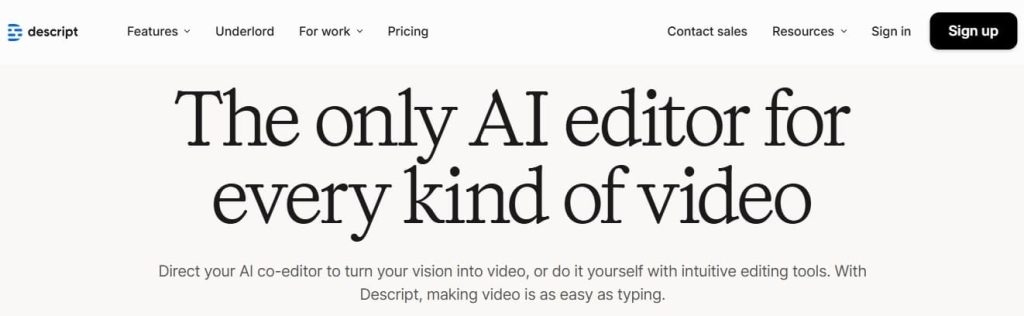
Descript is not just an audiobook tool—it’s a full audio and video editing platform. Its Overdub feature is particularly useful for audiobook creators. With Overdub, you can clone your own voice or create a custom AI narrator. This makes your audiobook sound unique and personalized.
The biggest advantage of Descript is its editing system. It works like a word processor for audio. You can edit text, and the audio automatically updates. This makes it easy to fix mistakes, cut unnecessary parts, or adjust pacing without re-recording the whole book.
Descript also has studio-quality editing features. You can remove background noise, balance audio levels, and add effects. This makes it ideal for authors who want their audiobook to sound polished and professional.
While Descript is a premium tool, it offers a free trial so you can test it before subscribing. If you want advanced editing and the ability to create an audiobook that feels like it was recorded in a studio, Descript is a top choice.
4. Speechify
Speechify started as a text-to-speech app for students and readers, but it has grown into a powerful AI audiobook tool. It’s user-friendly and designed for anyone who wants to turn text into natural-sounding audio.
Authors like Speechify because it’s fast and simple. You paste your text, choose a voice, and generate your audiobook. The platform has a wide variety of voices, including celebrity-like tones. Its AI technology makes the narration flow naturally, which is key for keeping listeners engaged.
Another strong point of Speechify is accessibility. The app works on web, iOS, and Android, making it easy to use from any device. This is helpful for authors who want to create and test audiobooks on the go.
Speechify also supports multiple languages, which helps reach international audiences. Its free plan is great for small projects, while the paid version offers premium voices and longer audio generation. Many independent authors use it to create affordable audiobooks without sacrificing quality.
5. ElevenLabs
ElevenLabs is one of the most advanced AI voice generators available today. It is famous for producing voices that sound almost identical to real human narrators. Many authors, publishers, and even film creators use it for professional projects.
The biggest strength of ElevenLabs is its voice realism. The AI is designed to capture emotions, tone shifts, and subtle pauses, which make the narration sound natural. This is especially important for audiobooks because listeners expect the voice to carry the emotion of the story.
ElevenLabs also offers voice cloning. If you want your audiobook narrated in your own voice, the platform can replicate it with high accuracy. This makes it unique compared to other tools.
In terms of pricing, ElevenLabs has a free trial with limited usage. Paid plans give you access to longer audio creation, custom voices, and commercial rights. If you want your audiobook to stand out with realistic voices, this tool is worth the investment.
6. Amazon Polly
Amazon Polly is a cloud-based text-to-speech service developed by Amazon Web Services (AWS). It’s one of the most reliable AI audiobook tools, especially for large projects. Many companies and publishers trust Polly for its scalability and professional quality.
Polly provides a wide range of voices in multiple languages. It uses neural text-to-speech technology, which makes the narration smooth and natural. You can also customize pronunciation, pacing, and intonation.
One of the biggest advantages of Amazon Polly is its integration with AWS services. This makes it easy to scale if you’re working on multiple audiobooks or publishing a large library. Authors who want to reach platforms like Kindle or Audible may also benefit from using Polly, since it’s part of Amazon’s ecosystem.
Amazon Polly works on a pay-as-you-go model. You only pay for what you use, which is ideal for authors who want flexibility. While it’s not the simplest tool for beginners, it’s one of the most powerful for professionals.
7. Google Cloud Text-to-Speech
Google Cloud Text-to-Speech is another powerful tool for creating audiobooks. It’s backed by Google’s AI technology, which makes it both reliable and high quality.
This tool supports over 220 voices in 40+ languages and variants. For authors aiming at an international audience, this is a huge advantage. The voices sound natural, and you can adjust pitch, speed, and tone to match your story’s style.
Google Cloud TTS also integrates easily with other Google services, making it a good option for publishers who want smooth workflows. The platform is designed for developers, but authors can still use it with basic knowledge.
Pricing is based on usage. It offers a free monthly tier, but for long audiobooks, you may need to pay. Despite that, the flexibility, scalability, and quality of voices make Google Cloud TTS a solid option for audiobook creators.
8. Microsoft Azure Speech Studio
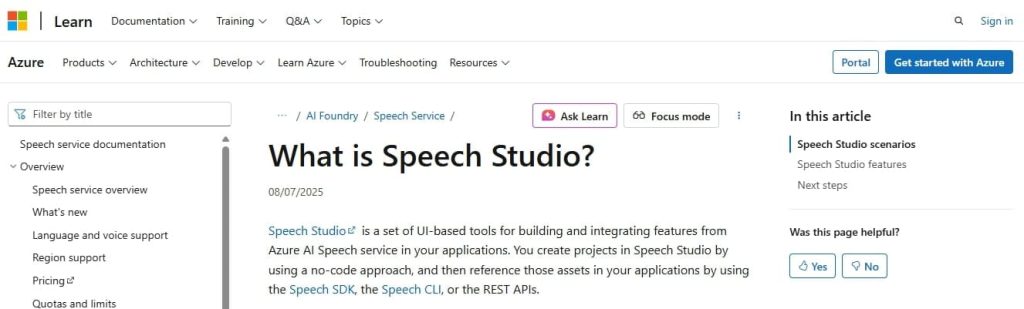
Microsoft Azure Speech Studio is a professional AI voice creation platform. It’s widely used for business, e-learning, and audiobook projects. The service provides neural voices that sound realistic and expressive.
One of its best features is custom voice creation. If you want a unique audiobook voice, Azure allows you to build one. This is great for branding, especially for authors or publishers who want a consistent narrator across multiple books.
Azure Speech Studio also provides tools for fine control. You can adjust pronunciation, pacing, and emotional tone. This makes the narration more dynamic and engaging for listeners.
The platform runs on a pay-as-you-go model, similar to Amazon Polly. It may not be the cheapest option for small projects, but for professional audiobook creators, it’s very reliable. Its integration with Microsoft’s cloud ecosystem makes it powerful for scaling up.
9. Resemble AI
Resemble AI is one of the most advanced platforms for custom voice creation. It allows authors and publishers to design unique voices that sound professional and engaging. This makes it especially useful for creators who want a narrator that matches their book’s mood or brand identity.
One standout feature of Resemble AI is voice cloning. You can record a few samples of your own voice, and the AI will replicate it. This means you can narrate your audiobook without spending hours in front of a microphone. For authors who want to maintain a personal touch, this feature is invaluable.
Resemble AI also provides real-time voice generation. This allows for quick edits and adjustments while creating your audiobook. You can fine-tune pronunciation, tone, and pacing to make the narration sound more natural.
The platform is priced for professionals, but the quality justifies the cost. If you’re serious about audiobook publishing and want a custom, high-quality voice, Resemble AI is one of the best options.
10. Narakeet
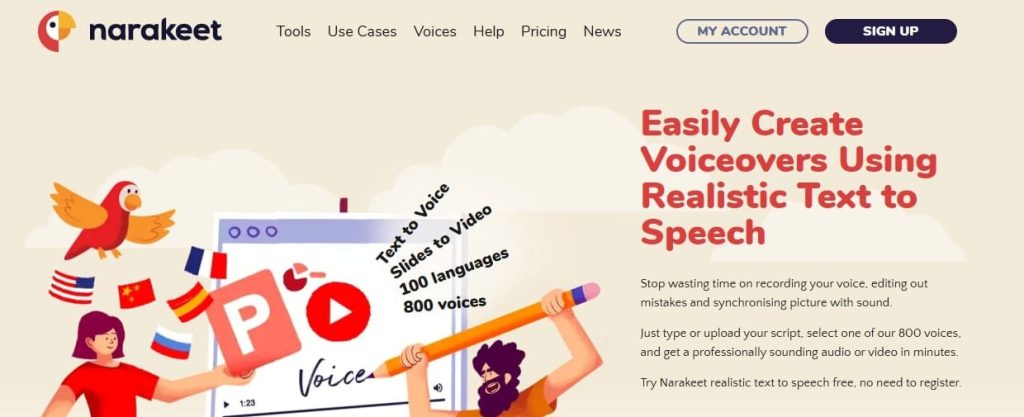
Narakeet is a simple and user-friendly AI narration tool. It’s designed for people who want to turn text into audio quickly without learning complex software. This makes it ideal for indie authors and small publishers who just need a straightforward audiobook solution.
With Narakeet, you paste your text, choose a voice, and generate your audio. It supports multiple languages and accents, making it useful for reaching global listeners. While it may not have as many advanced editing features as other tools, it’s fast and efficient.
Another advantage of Narakeet is that it runs online. You don’t need to install heavy software or set up complicated systems. The platform also supports different export formats, which helps if you plan to publish on various platforms.
Narakeet offers both free and paid options. The free version is suitable for testing and small projects, while the paid version unlocks longer scripts and higher-quality audio. For authors on a budget, it’s one of the easiest tools to get started with.
11. Lovo AI
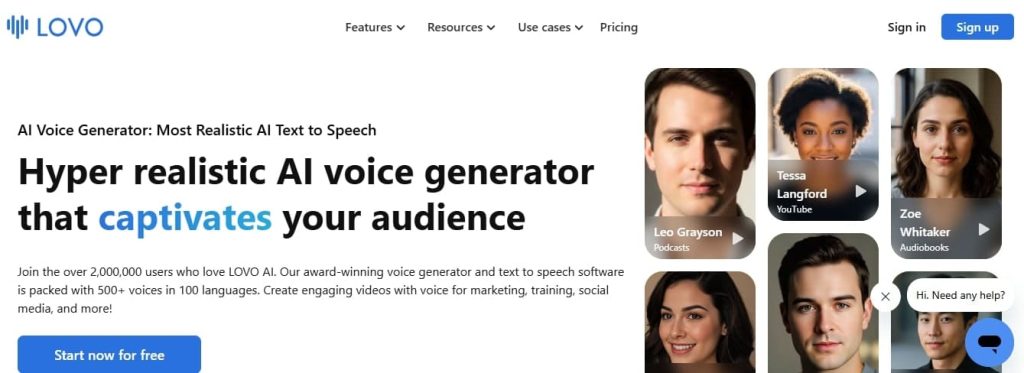
Lovo AI is a popular AI voice generator used for audiobooks, podcasts, and videos. It is known for its large library of natural-sounding voices. The platform focuses on making voices expressive, which is key for engaging audiobook listeners.
Lovo AI also allows customization. You can adjust tone, pacing, and emphasis, giving you control over how the narration sounds. For example, you can make the voice sound dramatic for thrillers or calm and soothing for meditation books.
The platform is cloud-based, so you can work from anywhere. It’s beginner-friendly, but it also has advanced options for professionals. This flexibility makes it attractive to both indie authors and established publishers.
Lovo AI offers a free plan with limited features. Paid plans unlock premium voices, longer audio, and commercial rights. If you’re looking for a balance between quality and price, Lovo AI is a solid choice.
12. Natural Reader

Natural Reader is one of the most beginner-friendly AI audiobook tools. It’s designed for people who want an easy way to turn text into speech without complicated setups. Many students, educators, and authors already use it for reading and narration.
For audiobook creators, Natural Reader provides clear and natural voices. It may not be as advanced as ElevenLabs or Resemble AI, but it’s reliable for simple projects. The interface is clean, and you can generate audio files quickly.
One of the highlights of Natural Reader is accessibility. It works as both an online tool and a desktop app, so you can use it on different devices. The software also supports various file formats, making it easier to publish your audiobook.
Natural Reader has a free version for basic use. Paid upgrades give you access to premium voices and commercial licenses. For authors starting out or experimenting with audiobooks, this tool is a budget-friendly option.
Free vs. Paid AI Audiobook Tools: Which One Should You Choose?
When it comes to AI audiobook creation, you’ll find both free and paid options. Each has its strengths, but the choice depends on your project goals.
Free Tools
Free tools are great if you are experimenting or creating a small project. They usually offer basic voices and limited features. For indie authors just testing the waters, these are a safe starting point.
-
Best for: Short stories, personal projects, or testing AI voices.
-
Limitations: Fewer voice options, shorter script length, and no commercial rights in most cases.
Paid Tools
Paid AI audiobook tools unlock premium features. These include more realistic voices, emotional expression, longer scripts, and export formats suitable for publishing. They also usually provide commercial rights, which is essential if you plan to sell your audiobook.
-
Best for: Full-length audiobooks, professional publishing, and distribution on platforms like Audible or Spotify.
-
Advantages: High-quality voices, customization, and legal usage for commercial projects.
Tip: Start with a free tool to experiment. Once you’re comfortable and ready to publish professionally, switch to a paid plan for the best results.
Step-by-Step: How to Create an Audiobook with AI
Creating an audiobook with AI is simpler than most people think. You don’t need a recording studio or professional narrator. Here’s how to do it in six easy steps:
Step 1: Choose Your AI Audiobook Tool
Pick one of the tools we covered, based on your needs. If you want natural voices, ElevenLabs is excellent. For budget-friendly options, Natural Reader or Narakeet are good choices.
Step 2: Upload or Paste Your Text
Most platforms let you upload your book in text format (such as DOCX, TXT, or PDF). Others allow you to copy and paste directly into the editor.
Step 3: Select a Voice
Choose a voice that matches your book’s tone. For a thriller, you might want a deeper, more serious voice. For a children’s book, a friendly and warm voice works best. Some tools also let you add accents or different languages.
Step 4: Edit the Narration
AI tools let you adjust pacing, pronunciation, and emphasis. This step is important for making the narration flow naturally. Pay attention to character names, dialogue, and emotional moments.
Step 5: Export Your Audiobook
Once satisfied, export your audiobook. Common formats include MP3, WAV, and M4B. If you plan to publish on Audible, check their format requirements before exporting.
Step 6: Publish Your Audiobook
Upload your finished audiobook to platforms like Audible, Apple Books, Spotify, or Google Play Books. Make sure you have the rights for commercial use if you’re selling it.
Pro Tip: Always listen to the full audiobook before publishing. This helps catch errors in pacing, pronunciation, or flow.
Also Read
15 Best AI Tools for Journalists
19 Best Free AI Tools for Architects
14 Best Free AI Infographic Generators
14 Best Free AI Music Generators
Conclusion
Creating audiobooks with AI is no longer a futuristic idea. In 2025, AI tools are powerful, affordable, and accessible to anyone. Whether you’re an indie author, a publisher, or a content creator, AI can help you turn text into engaging audiobooks quickly and efficiently.
We covered 12 of the best AI tools for creating audiobooks:
-
Murf AI – Professional-quality voices and easy editing.
-
Play.ht – High-quality neural voices with customization.
-
Descript (Overdub) – Edit text like a word processor with your voice cloned.
-
Speechify – Simple, fast, and accessible on multiple devices.
-
ElevenLabs – Ultra-realistic voices with emotion and voice cloning.
-
Amazon Polly – Cloud-based, scalable, and professional.
-
Google Cloud TTS – Multi-language support with high-quality voices.
-
Microsoft Azure Speech Studio – Custom voices and professional editing.
-
Resemble AI – Custom voice creation and real-time editing.
-
Narakeet – Beginner-friendly online tool for fast audio.
-
Lovo AI – Large library of expressive voices for multiple genres.
-
Natural Reader – Easy-to-use and affordable for small projects.
Key Takeaways:
-
Start with a free tool to experiment.
-
Use paid tools for professional, publishable audiobooks.
-
Choose voices that match your story’s tone and emotion.
-
Edit carefully to ensure smooth narration.
-
AI tools will continue to evolve, making audiobook creation faster and more immersive.
Final Tip: Don’t wait—experiment with AI audiobook tools today. Even a short story can be turned into an engaging audiobook in hours. With the right tool, you can reach new audiences and bring your stories to life like never before.